


Capturing Conversations, Creating Connections – Meet Visual Scribe Jenni [pronounced Yenni] Ottilie Keppler!
How do you turn conversations, ideas, and shared experiences into a visual story that brings people together?
Meet Jenni Ottili Keppler, a talented visual scribe who transforms spoken words into colourful, meaningful illustrations that capture the heart of a conversation.
At CVIMS, we’ve had the pleasure of working with Jenni on multiple occasions, and each time, we’ve been inspired by her creativity, thoughtful approach, and remarkable ability to capture complex discussions.
Enjoy the interview below and get inspired by Jenni and the process behind her work!
How would you describe visual scribing to someone encountering it for the first time?
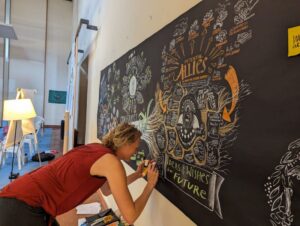
Image above: Analog Visual Scribing at a 4 day conference 2023 – GIA Grassroots Innovations Assembly for Agroecology
Imagine a conference where someone takes notes through illustrations and words, capturing the key themes, insights and perspectives – as well as a little bit of curious side chats from the participants – That’s me, the visual scribe. Throughout the gathering these notes grow into a large visual made up of details from the presentations, discussions, activities and guiding questions or themes.
Sometimes I work digitally, with my iPad and sometimes, when there is more time, I do a more thought through visual synthesis on paper that stretches over 3–4 meters across the wall. When I work on white paper I use markers specific for graphic recording. When I work on black paper I use soft pastel chalks or acrylic markers – which pop out nicely.
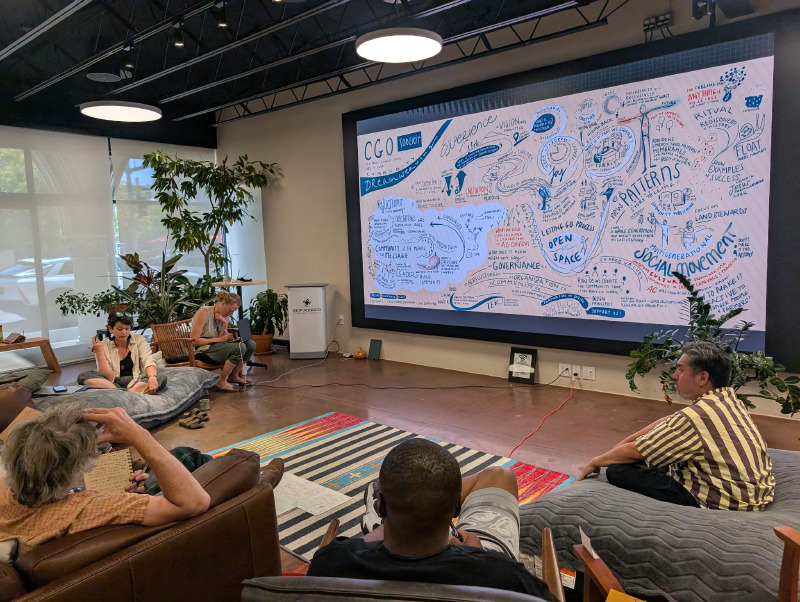
Image above: Dream Weaving (no layout preparation) – Digital for CGO Working Group
One of my favorite scribing formats is what I call “Dream Weaving” which falls under the category of “generative scribing” because it is very emergent with the scribe listening to what people are sharing at a deeper level, with no pre-concept of the content. Over the course of 2–3 hours a community shares about their learnings from the past and their dreams for the future. It is a slow, heartfelt and vulnerable space that allows for new insights and wisdom to emerge.
What role can visual storytelling play in community building?
I think visual storytelling is especially valuable in moments when a community is trying to find alignment, when there are multiple perspectives in the room that want to be heard, seen, and integrated, or when people are coming together to imagine a shared vision for the future.
For me, visual storytelling is a way of making collective thinking visible. It helps people see connections between their perspectives and creates an opportunity for a shared understanding to emerge.
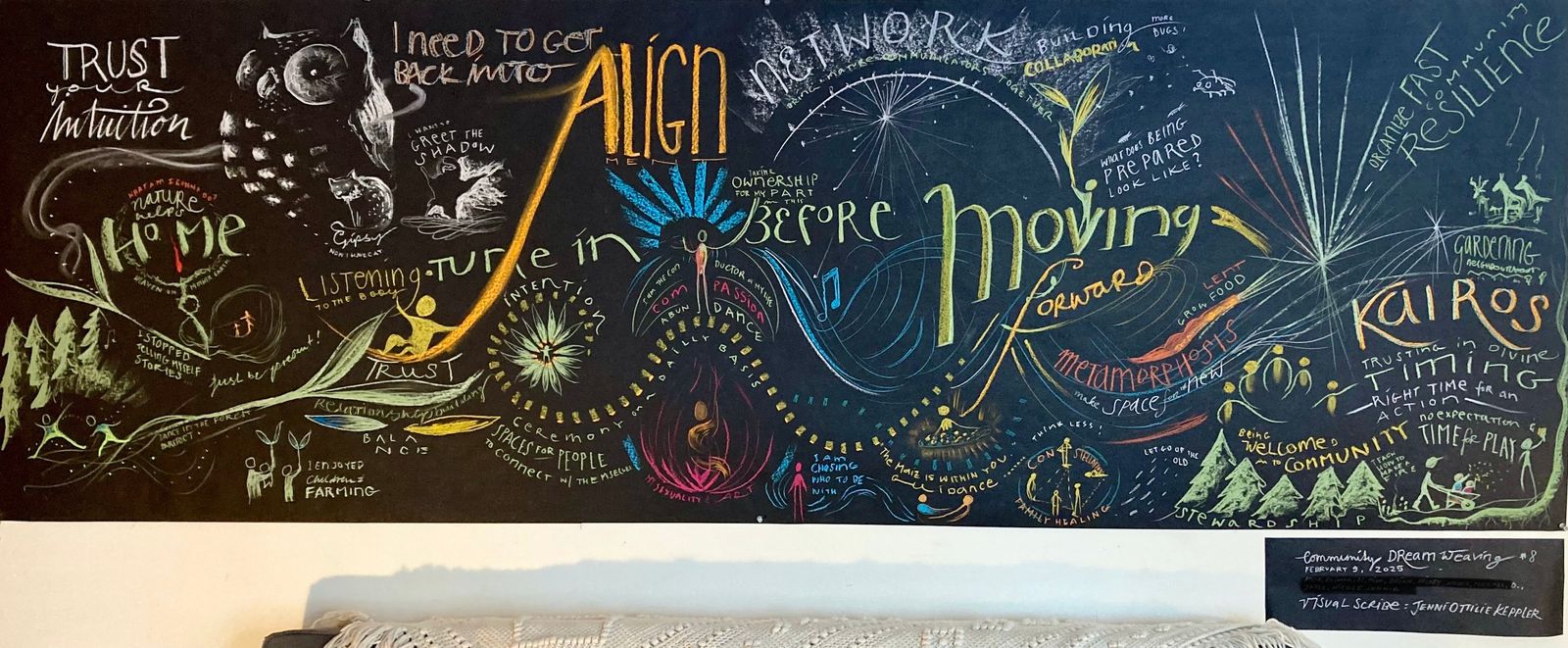
Image above: Dream Weaving (no layout preparation) – Analog for Double Infinity Community
How do you prepare before visually documenting an event or community conversation?
I usually ask for about three weeks’ notice before taking on a scribing project. That gives me enough time to have a briefing call with the organizers and really understand the context, the purpose of the gathering, and the themes people will be exploring.
I also ask whether there are questions, presentations, or other materials I can look at beforehand. I want to understand the language of the particular field, because every sector has its own vocabulary, and sometimes it almost feels like learning a new language.
I also start building a visual vocabulary. I’ll take key words and themes and begin doodling and sketching possible ways of representing them visually. I’m not trying to predetermine what the conversation will produce, but I want to have some visual ideas in my back pocket.
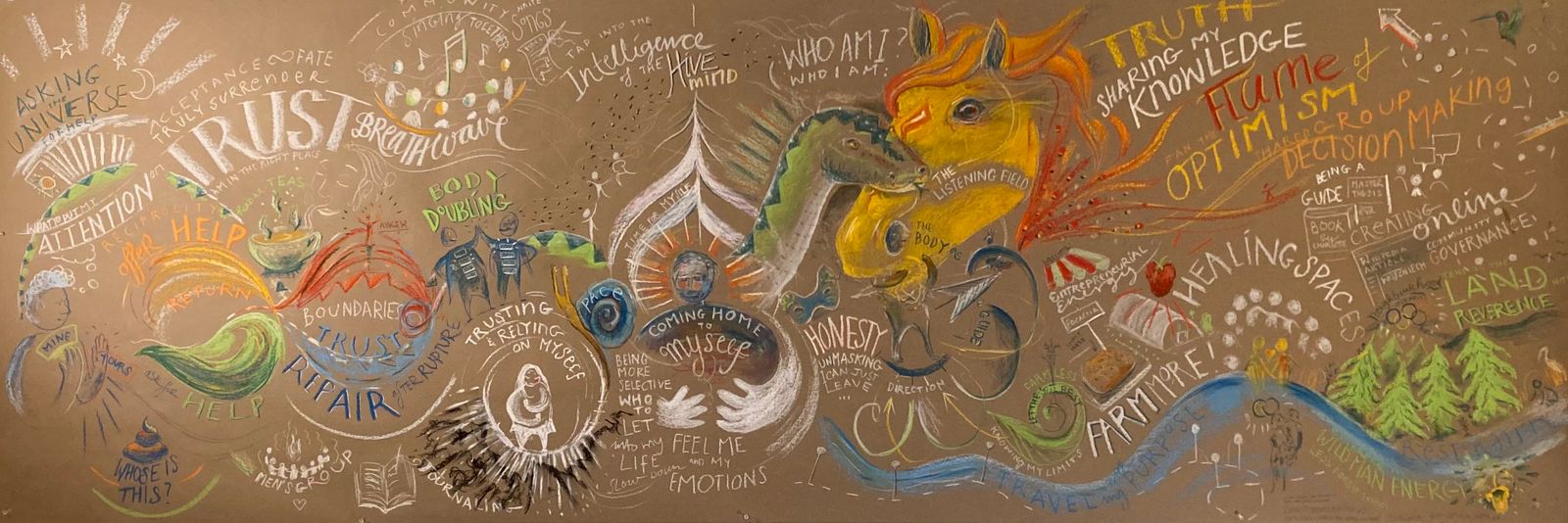
Image above: Deep listening Dream Weaving Firehorse 2026 – Analog for Double Infinity Community
What are you listening for while people are speaking?
I’m listening for where the heart of the conversation is. What feels significant? What are the ideas, stories, or connections that really matter to the people in the room?
At the same time, I’m particularly attentive to quieter voices. I want to make sure that the visual doesn’t simply reflect the people who speak the most or who are the most confident in a group.
Visual scribing offers an opportunity to give those quieter contributions space, too, and to show that they matter. For me, it’s about listening for both the central themes and the perspectives that might otherwise be overlooked.
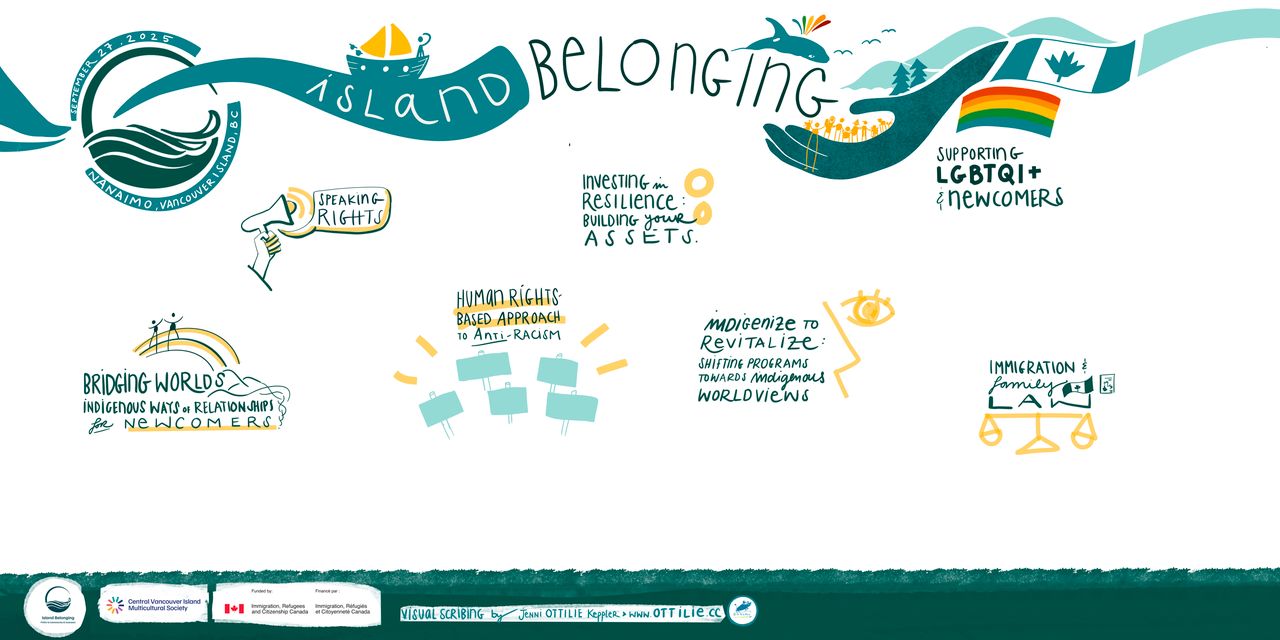
Image above: Layout Preparation – CVIMS Island Belonging 2025
How do you translate complex or abstract ideas into images?
Part of it comes from building a visual vocabulary beforehand. I explore different ways of representing the themes I know we’ll be discussing, and that gives me a starting point.
My background in illustration, graphic design, and systems thinking all come together here. I’m looking not just for a picture that represents an individual concept, but also for ways to show relationships and connections between ideas.
But a lot of it is also intuitive. I might hear something and immediately associate it with a particular image, metaphor, or visual relationship. Sometimes a complex idea becomes much easier to communicate when you find the right metaphor for it.
Do you revise the visual record afterward, or is the live process part of its meaning?
With digital scribing, I usually begin by building a first scaffold of the visual during the event. Afterwards, I can fill in the colours, refine certain elements, or rewrite things that haven’t quite turned out as I intended.
At the end of an event, I do a ten-minute walkthrough of the visual as it stands. It becomes a visual summary of the gathering, and I find that it’s often a powerful way to bring a conference to a close. Several times I have seen tears in people because they were so moved because they recognized what has been created together over the course of the event.
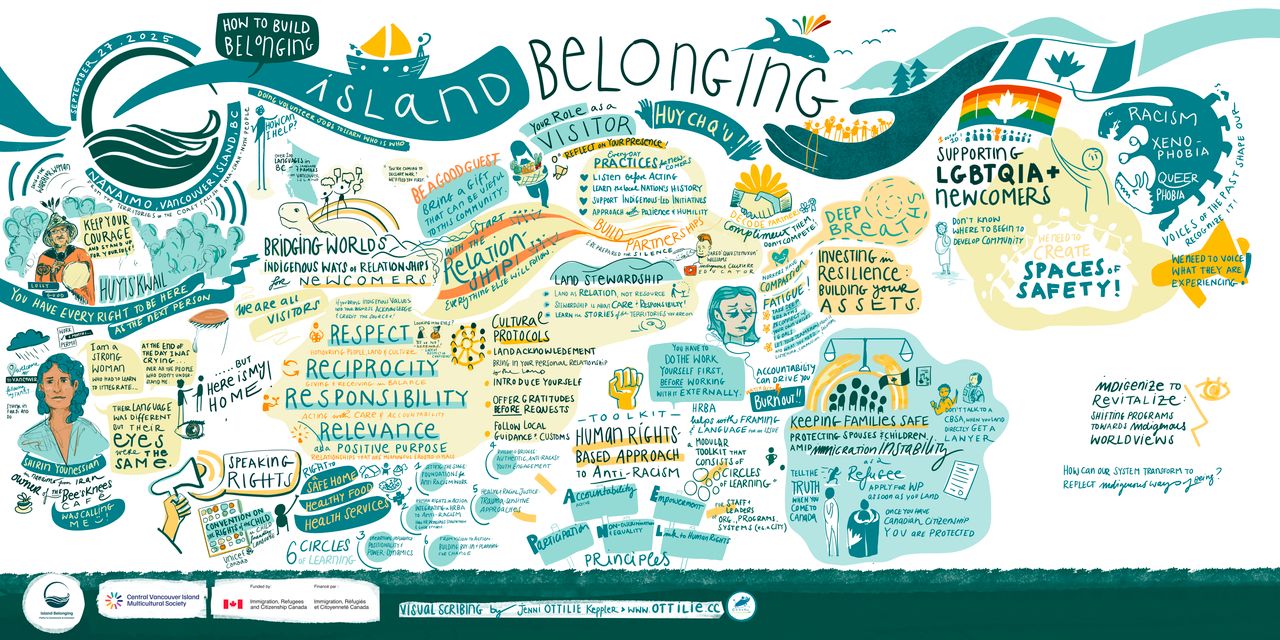
Image above: Presentation Visual at the end of the Event – CVIMS Island Belonging 2025
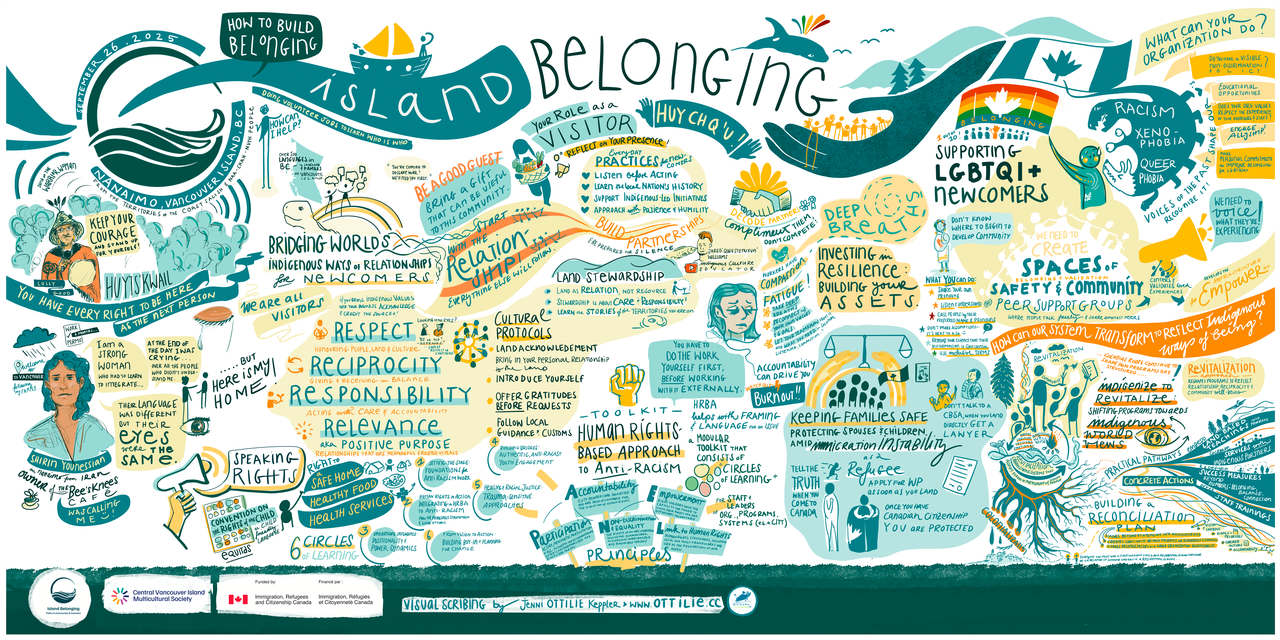
Image above: Final Visual post-event – CVIMS Island Belonging 2025
How can visual scribing help people feel heard and represented?
I think there’s something powerful about seeing your contribution appear in a shared visual. It gives people a form of feedback: I was heard. What I said matters. I’m part of this conversation.
What makes visual storytelling accessible to people with different languages, backgrounds, or learning styles?
Images offer another way into meaning, alongside spoken and written language. A well-chosen image or metaphor can communicate something that might otherwise take a lot of words to explain.
That can be especially helpful when people speak different languages, or when they process information in different ways. The visual gives people something to look at, return to, and interpret, even if they haven’t caught every word that was spoken.
How do you approach conversations involving culture, identity, belonging, or lived experience?
I approach them with curiosity and with the understanding that I won’t necessarily know the meaning or context of everything I hear.
I prepare beforehand by learning as much as I can about the gathering, the people involved, and the cultural context. I also research symbols and imagery that might carry particular meanings, including symbols that would be inappropriate or insensitive to use.
If something comes up during the conversation that I don’t fully understand, I’ll seek clarification from an organizer, facilitator, or workshop host rather than simply assuming I know what it means.
How can a finished visual continue supporting a community after an event ends?
A visual can become a resource that continues to live with a community long after the gathering itself.
Sometimes the full visual is turned into a poster or shared digitally. Other times, individual illustrations or sections can be cropped and used in presentations, on websites, in flyers, or on Thank You cards and other materials.
I often see my visuals being used in later presentations to refer back to an event, a particular topic, or a collective process. In that sense, they can become a kind of visual toolbox that people return to and draw from.
The visual also helps preserve something of the gathering: the themes people explored, the connections they made, and the ideas they wanted to carry forward. It gives the community a shared reference point as it continues its work.
What do you hope people feel when they see the completed work?
I hope people feel curious, and that they feel they’re part of something larger and meaningful.
I’d love for the visual to invite people to look more closely, notice connections they hadn’t seen before, and feel a sense of participation in something collective.
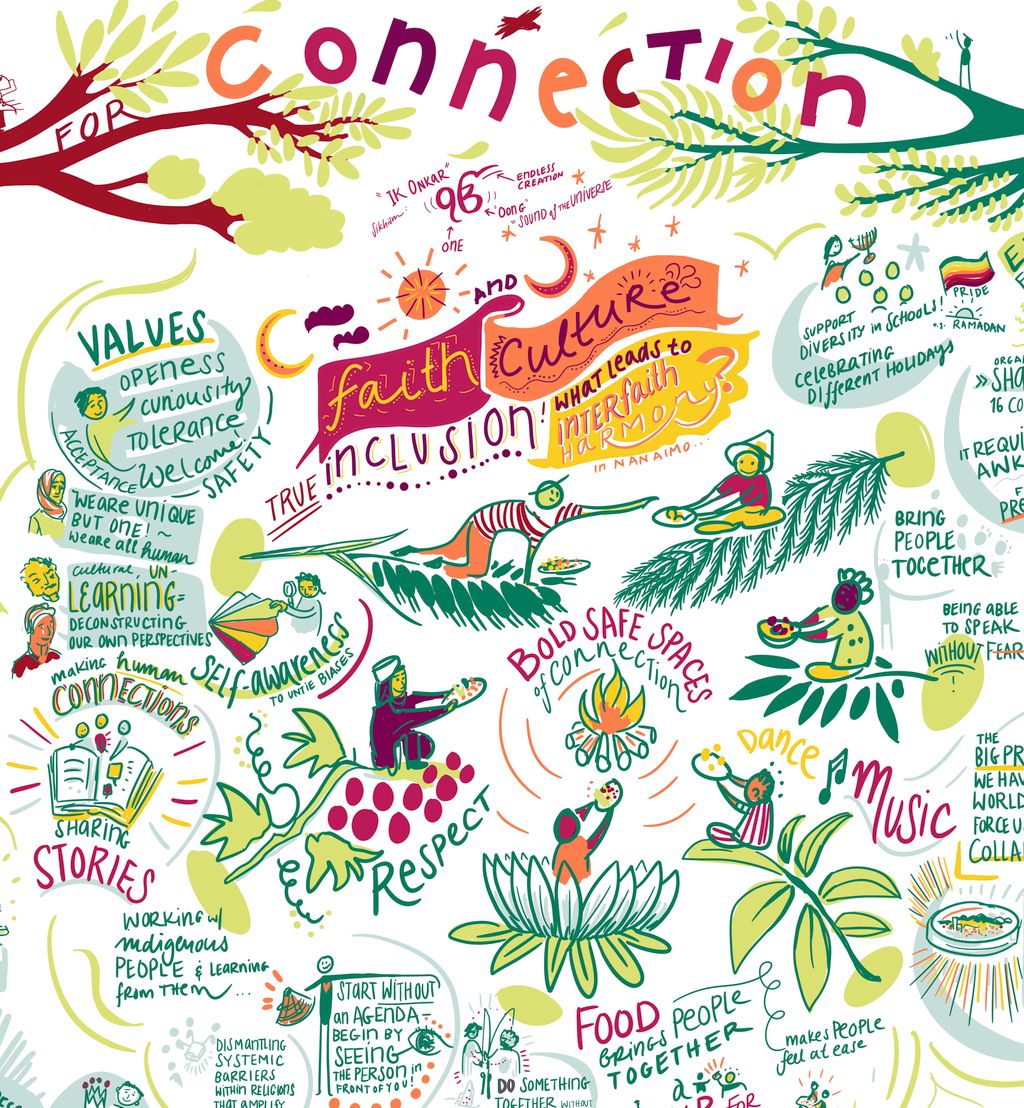
Image above: Cropping of Visual from CVIMS Island Belonging 2026 – Conversations for Connection
What does belonging look like to you, and how do you represent it visually?
For me, belonging has something to do with being rooted. I have this image of sitting at the base of a tree and connecting with its roots, feeling deeply grounded and connected to the place I’m in.
On a human level, I think of a circle of people sharing food and conversation. They’re listening to one another, making an effort to understand one another, and showing care for one another.
Visually, I might represent that through a circle, with people sharing food, stories, and gifts. I’d want to show the diversity of the people present, while also showing the relationships between them.
It’s about creating a space where people can bring their differences and be met with respect, curiosity, care and a willingness to listen and understand.
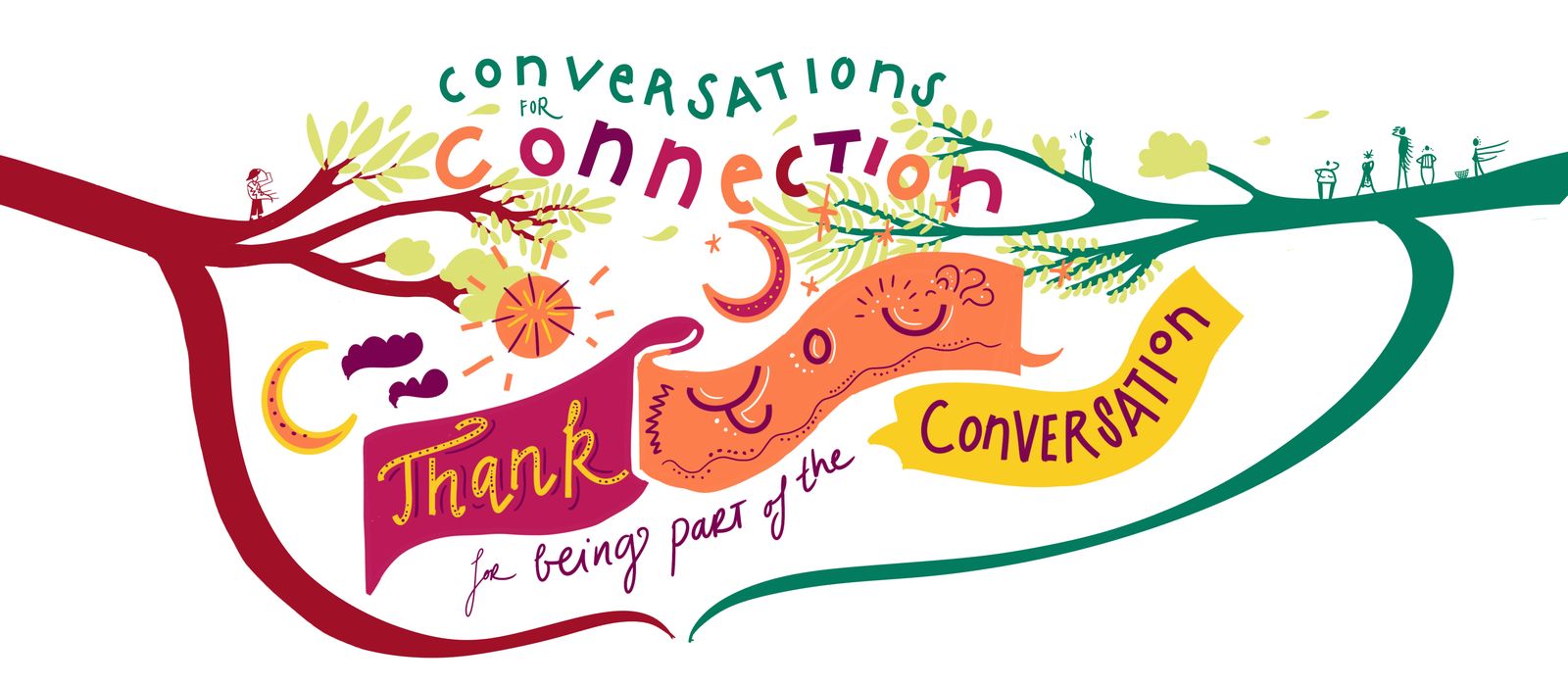
Image above: Thank you note for participants and organizers for CVIMS Island Belonging Conversations for Connection 2026
Check out Jennie’s website: www.ottilie.cc
